Announcements
Importance of correct posture
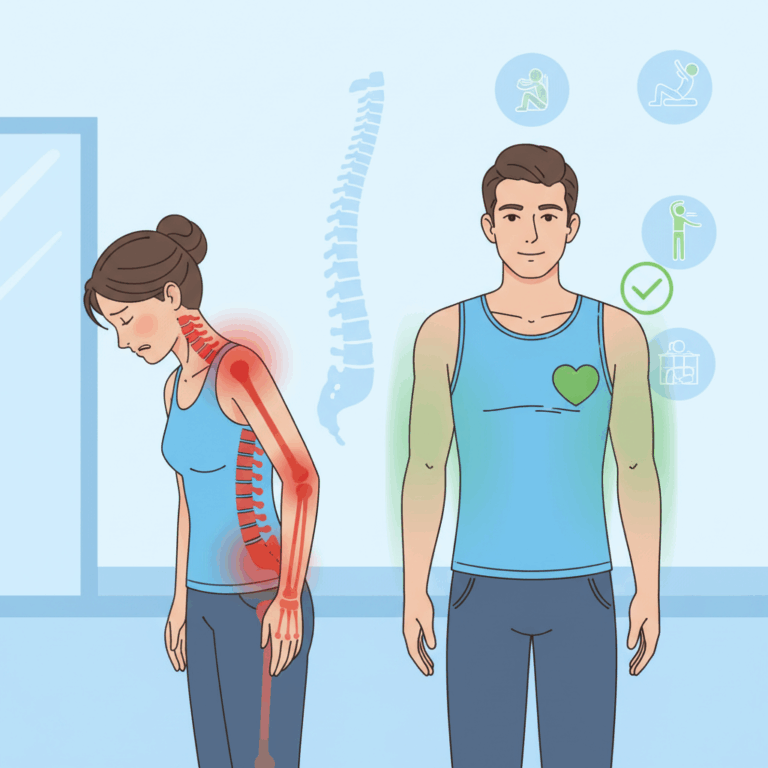
Correct posture is essential to maintain health and prevent discomfort. When the body is aligned, unnecessary tension on muscles and joints is reduced.
Adopting proper posture helps distribute body weight in a balanced way, preventing certain areas from supporting excessive loads that can cause pain or damage.
This promotes movement efficiency and protects the spine, key to lasting physical well-being.
Uniform distribution of body weight
Correct posture ensures that the weight of the body is distributed evenly between both sides. This prevents overload in certain areas, especially the spine and joints.
Announcements
Balanced distribution decreases pressure on ligaments and muscles, allowing them to work without excessive fatigue or imbalances.
Thus, the risk of postural deformities is reduced and better functionality of the body is promoted.
Prevention of muscle and joint pain
By maintaining proper posture, pressure on joints and muscles is minimized, preventing common discomforts such as back, neck and shoulder pain.
Announcements
Correct posture reduces exposure to injuries and joint wear, strengthening long-term musculoskeletal health.
This is essential to maintain mobility and quality of life, avoiding complications caused by incorrect postures.
Muscle benefits of good posture
Good posture is essential for muscle well-being as it allows muscles to function without unnecessary tension. This helps prevent exhaustion and promotes overall health.
By maintaining proper alignment, muscles can work efficiently, contributing to better endurance and less fatigue during daily activities.
Likewise, correct posture protects the muscle structure and prevents problems derived from inappropriate or excessive use of certain muscle groups.
Reduction of muscle tension
Proper posture reduces excessive load on the muscles, preventing stiffness and contractures. This avoids pain and discomfort caused by constant effort.
By decreasing tension, the body feels more relaxed, which improves mobility and reduces the likelihood of muscle blows or injuries.
This effect is key for those who spend many hours sitting or in static positions, helping them keep their muscles healthy.
Maintenance of the natural curves of the spine
Good posture preserves the natural curves of the spine, essential for shock absorption and balanced body weight distribution.
These curves act as shock absorbers, preventing damage to discs and vertebrae, and promoting muscular and joint well-being.
When the spine is aligned, the muscles responsible for supporting it do not become overloaded, reducing the risk of pain and chronic injuries.
Prevention of musculoskeletal injuries
Adopting correct posture is a vital strategy to avoid musculoskeletal injuries, such as muscle tears or tendon strains.
A balanced posture protects muscles and ligaments by distributing forces appropriately during movement and rest.
This not only improves physical ability, but also protects in the long term against problems that can affect quality of life.
Impact of posture on joint health
Posture has a direct influence on joint health. Correct alignment reduces wear and pressure on joint surfaces, preserving their function.
When we maintain proper posture, the joints protect themselves from overloads that can cause inflammation and chronic pain over time.
Reduced pressure on the joints
Correct posture distributes body weight in such a way that it decreases pressure on key joints, such as knees, hips and spine.
This prevents premature wear of cartilage and reduces tension in ligaments, facilitating freer and painless movements.
By reducing pressure, the joints retain their functionality and the appearance of constant inflammation and discomfort is avoided.
Prevention of chronic joint problems
Adopting proper posture is essential to prevent chronic joint diseases, such as osteoarthritis or degenerative arthritis.
Correct alignment reduces repetitive stress on the joints, something that, in the long term, can prevent irreversible damage and functional limitations.
In addition, good posture contributes to maintaining optimal joint mobility, which favors quality of life and independence in old age.
Posture and general well-being
Correct posture is key to improving general well-being. Maintaining proper alignment contributes to better body balance, essential for daily stability.
In addition, good posture not only prevents aches and pains, but also promotes essential functions such as balance and blood circulation.
These benefits directly impact quality of life and help keep the body healthy and protected from injury.
Improved balance and reduced risk of falls
Proper posture improves body control and stability, significantly reducing the risk of falls. This is especially important in older people or people with limited mobility.
Balance is strengthened thanks to correct weight distribution and body alignment, which facilitates safe and coordinated movements.
With a better balance, accidents and injuries are reduced, contributing to a more active and safe lifestyle.
Facilitates blood circulation
Maintaining correct posture allows blood to flow more easily throughout the body. Proper alignment prevents compressions that hinder circulation.
Optimal circulation is essential for tissue oxygenation and toxin elimination, improving overall health and daily energy.
Additionally, proper posture reduces pressure on veins and arteries, preventing circulatory problems and promoting better cardiovascular function.