Announcements
Alcohol interference in sleep onset and quality
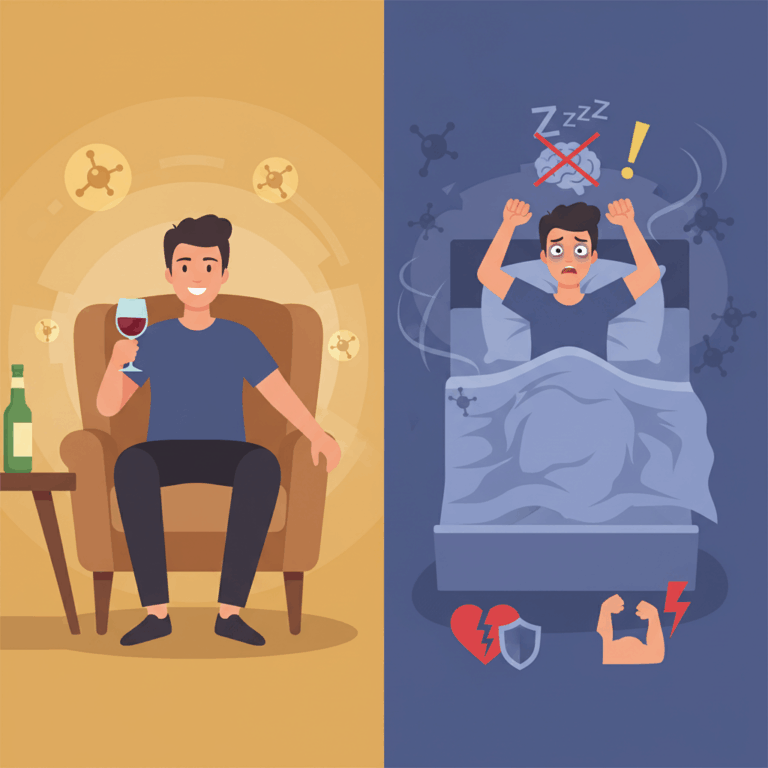
Alcohol consumption can facilitate the onset of sleep thanks to its sedative effect, helping you fall asleep faster. However, this initial advantage is only temporary and does not imply good quality sleep.
As the body metabolizes alcohol, deep sleep and REM, the most important phases for physical and mental restoration, are significantly reduced. This alteration negatively affects the overall quality of night's rest.
Deep sleep is crucial for body recovery, while REM sleep is related to memory consolidation and emotional regulation. Alcohol interferes with both, harming general health.
Initial sedative effect of alcohol
Alcohol acts as a depressant of the central nervous system, generating drowsiness and facilitating the onset of sleep. This sedative effect makes people fall asleep faster after consuming it.
Announcements
This action is useful for those who face difficulty falling asleep, but the benefit is temporary and does not guarantee a restful or prolonged rest. It often leads to fragmented and less restorative sleep.
Additionally, the sedative effect wears off as the body processes alcohol, causing disruptions in sleep during the second half of the night, decreasing the perception of rest.
Reduction of deep sleep and REM
Alcohol decreases the time spent in deep sleep, which is vital for the body's physical repair, including tissue regeneration and the release of hormones such as growth hormones.
Announcements
Likewise, REM sleep, a phase where emotions and memory are consolidated, is also reduced. This can affect emotional state and cognitive ability during the next day.
Loss of these essential phases leads to a feeling of fatigue and lower performance, and can increase vulnerability to sleep disorders and long-term health problems.
Consequences of alcohol on body recovery during sleep
Alcohol consumption negatively affects the body's ability to recover during sleep, weakening vital repair and restoration processes.
This interference is mainly due to altered release of key hormones and sleep fragmentation, preventing deep and continuous rest.
Additionally, alcohol influences emotional and cognitive functions by reducing the sleep phases necessary to process these important areas.
Alteration in the release of repair hormones
During deep sleep, the body releases growth-like hormones, essential for repairing muscle tissues and strengthening the immune system.
Alcohol reduces this crucial phase, which decreases hormonal release and affects the body's ability to recover properly during the night.
This alteration can translate into less cell regeneration and slower physical recovery after daily effort or injuries.
Sleep fragmentation and nighttime awakenings
Alcohol causes frequent interruptions during the night, fragmenting sleep and increasing awakenings that interrupt the restful cycle.
These interruptions prevent rest from being continuous and deep, reducing the efficiency of sleep in restoring body and mind.
Fragmentation also causes feelings of tiredness upon waking and can contribute to chronic long-term sleep disorders.
Impact on emotional and cognitive processing
The reduction in REM sleep caused by alcohol affects emotional processing and memory consolidation, processes that occur during this phase.
This can lead to mood problems, such as irritability or anxiety, and difficulties concentrating and learning.
The negative impact on these cognitive and emotional functions decreases the quality of life and general well-being of the individual.
Influences of alcohol on the natural sleep-wake cycle
Alcohol consumption alters the natural sleep-wake cycle, essential for maintaining a healthy biological rhythm and adequate rest. These alterations can have an impact on the quality of sleep and general well-being.
Alcohol interferes with the production of melatonin, a key hormone for regulating sleep schedules, and increases the risk of breathing disorders at night, such as snoring and sleep apnea.
Interference with melatonin production
Alcohol negatively affects the production of melatonin, a hormone that regulates the circadian cycle and allows sleep to be synchronized with the night. By reducing its release, the natural onset of sleep is altered.
This interference causes difficulties falling asleep and causes imbalances in biological rhythm, which can cause daytime sleepiness and chronic fatigue.
Additionally, melatoninergic dysregulation can intensify insomnia problems and hinder the body's ability to adapt to changing schedules or work shifts.
Increased risk of snoring and sleep apnea
Alcohol relaxes the throat muscles, which promotes airway obstruction and causes snoring. This relaxation increases the risk of obstructive sleep apnea, a dangerous condition.
Sleep apnea causes frequent interruptions in breathing during the night, fragmenting rest and causing feelings of fatigue when waking up.
These respiratory disorders associated with alcohol consumption reduce sleep quality and can negatively impact cardiovascular and brain health.
Prolonged effects of alcohol consumption on sleep
Prolonged alcohol consumption causes a constant degradation in the quality of sleep, negatively affecting the body's ability to rest effectively and restfully.
Over time, this persistent alteration can cause imbalances in the sleep cycle, affecting general well-being and increasing the risk of developing related disorders.
It is essential to understand how alcohol influences sleep to prevent health complications linked to inadequate long-term rest.
Global degradation of sleep quality
Chronic alcohol consumption reduces the percentage of deep and REM sleep, generating superficial and less restful sleep that affects physical and mental recovery.
This global degradation promotes daytime fatigue, decreased performance, and increased susceptibility to diseases associated with poor sleep.
In addition, frequent awakenings and sleep fragmentation increase, preventing continuous cycles and restorative cycles, which further complicates the quality of rest.
Possible triggering of insomnia and sleep disorders
The disruptive effect of alcohol can induce chronic insomnia, making it difficult to fall asleep and maintain sleep on a sustained basis.
It also increases the risk of developing other sleep disorders, such as apnea, which severely affect health and amplify rest-related problems.
These disorders cause a negative cycle where the person can consume more alcohol to try to improve sleep, perpetuating the problem.