Announcements
Organization and planning to avoid distractions
In the workplace, one efficient organization it is key to minimizing interruptions and maintaining concentration. Planning clearly allows for better time management.
By defining objectives and structuring the day, mental dispersion is avoided and productivity is improved. Strategic planning is the first step to focused work.
Establish clear priorities
Identifying the most important tasks helps direct attention to what really adds value. Prioritizing avoids the feeling of chaos and improves time management.
By ordering activities from most to least relevant, a clear and strategic vision is achieved. This helps complete essential issues first and reduces distractions.
Announcements
In addition, establishing clear priorities allows you to adjust daily work and respond better to unforeseen events without losing the main focus.
Assign specific blocks of time
Dividing the day into periods dedicated to specific tasks enhances the focus on each activity. This segmented technique, similar to Pomodoro, increases efficiency.
By assigning blocks, multitasking and distractions are reduced, facilitating deep concentration. This also helps measure the time spent on each task.
Announcements
Respecting these blocks creates an orderly routine that prevents unnecessary interruptions and encourages a constant pace of work.
Optimization of the work environment
Create a suitable environment it is essential to avoid distractions and enhance productivity. A well-prepared space directly influences daily performance.
Additionally, controlling factors such as noise and digital notifications contributes significantly to maintaining sustained focus during the workday.
Prepare a suitable workspace
An orderly space equipped with what is necessary facilitates concentration and reduces distractions. It is important to have only what is essential for the task at hand.
The environment should be comfortable, with good lighting and a pleasant temperature. Organizing the desk in a minimalist way helps free the mind.
Avoiding clutter and preparing the place before starting allows you to start work with clarity and focus, reducing visual or physical interruptions.
Control noise and external stimuli
Ambient noise can affect your ability to concentrate. Using headphones with instrumental music or searching for quiet areas helps minimize these distractions.
Reducing external stimuli, such as movements or close conversations, helps maintain an environment conducive to deep work and sustained attention.
If it is not possible to eliminate noise, isolation techniques or white sounds can be an effective solution to take care of your work approach.
Manage digital notifications
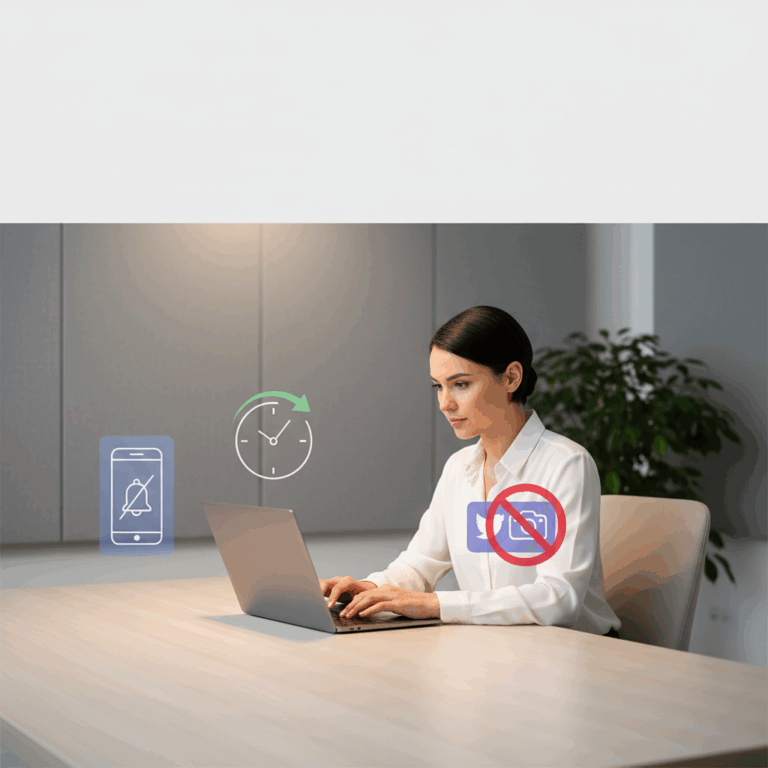
Constant email and social media alerts disrupt workflow and break concentration. Disabling them during key periods is essential.
Using apps to block sites or notifications during the day helps avoid digital distractions and improves task efficiency.
Scheduling specific moments to review messages and emails allows you to better control time and maintain attention on priority tasks.
Communication and time management
Organized communication is essential to avoid constant interruptions. Defining times to answer emails and calls optimizes time and improves focus.
Properly managing time spent in meetings and messages reduces distractions and allows for a more continuous and efficient workflow.
Schedule times for emails and calls
Setting specific times to check emails and answer calls helps avoid frequent distractions. This allows you to concentrate on tasks without constant interruptions.
This method avoids the feeling of permanent urgency generated by notifications, encouraging deeper and more effective attention during the work day.
In addition, informing colleagues about these times creates an environment of respect for moments of concentration, thus facilitating more productive work.
Establish schedules and agendas for meetings
Planning meetings with defined schedules and clear objectives minimizes wasted time and reduces unnecessary interruptions to the day.
Short meetings with established agendas ensure that each meeting is productive, avoiding unnecessary chatter that causes distraction.
Additionally, maintaining fixed schedules helps participants better prepare and allocate enough time for other relevant tasks throughout the day.
Practices to improve concentration
Improving concentration is essential to avoid distractions and optimize work performance. Implementing specific practices enhances focus and productivity.
These strategies help train the mind to maintain attention on important tasks, reducing dispersion and increasing the quality of the work performed.
Apply mindfulness and breathing exercises
Mindfulness allows you to train full attention, helping to return to the present and avoid scattered thoughts during the work day.
Simple breathing exercises reduce stress and improve mental clarity, promoting sustained focus on assigned tasks.
Incorporating these practices regularly helps create a more conscious work routine that is less vulnerable to external distractions.
Incorporate scheduled breaks
Scheduled breaks are essential to oxygenate the mind and avoid exhaustion, maintaining concentration at optimal levels throughout the day.
Taking short breaks away from the screen helps reduce visual and mental fatigue, increasing performance during periods of intensive work.
Integrating these breaks into work hours allows a healthy balance between effort and recovery, enhancing long-term productivity.